Ewing Cook
Five Days at MemorialEwing Cook was a longtime pulmonologist, veteran critical-care physician, and chief medical officer at Memorial Medical Center. During Hurricane Katrina, his familiarity with intensive care and comfort-focused treatment made him a trusted source of advice as ordinary hospital routines collapsed. That experience also placed him at the center of one of the crisis’s most consequential decisions: the medication given to Jannie Burgess, a critically ill patient left behind in the hospital. Cook understood the choice as an attempt to prevent suffering in an impossible situation; later scrutiny made the purpose and effects of his actions a matter of investigation and public dispute.
Career and Medical Practice
Cook had worked at Memorial for a quarter century and, after retiring from clinical practice not long before the storm, served as its chief medical officer. A pulmonologist, he had treated patients dependent on life support and was accustomed to helping them die without pain or anxiety when treatment was withdrawn. Susan Mulderick had worked with him for two decades, dating to her time as an ICU head nurse, and knew him as a physician willing to order medication to relieve suffering. His approach to dying patients was also familiar to Karen Wynn, who had learned about withdrawal of life support while working in the ICU under his guidance.
Cook and Wynn served on Memorial’s bioethics committee. Wynn, its longtime chair, often consulted with other physicians when patients’ treatment reached a point at which further efforts could not make them well. Cook was known for delivering difficult news directly, including that the remaining course was to make a patient comfortable. Wynn described her own role as helping doctors recognize when it was time to speak with a patient’s family. These established practices formed the professional context for Cook’s decisions during Katrina, but the disaster removed the usual conditions around end-of-life care, including the presence of families and the assurance that patients could be safely moved or closely monitored.
Cook’s influence extended beyond formal committee work. Cathy Green recalled that Memorial ICU physicians such as Cook wrote medication orders that gave nurses considerable latitude. She considered such comfort medication part of the unit’s culture. After Memorial’s prolonged closure sent her to work in other hospitals, she observed that patients there were not sedated as extensively. Her comparison suggests that Cook’s established practice belonged to a particular institutional culture, one that emphasized comfort but could be interpreted differently when normal safeguards and communication were disrupted.
The Hospital Crisis and Its Reversals
When Mulderick told a hastily assembled command meeting that floodwaters were approaching, the atmosphere in the command room shifted from a hospital emergency toward a military operation. The immediate objective was to act before the power failed. Cook assumed responsibility for another part of the fourth floor, taking over from his son, also a physician, who had gone home the previous night and could not return through the flooding. To ease the nurses’ workload, Cook decided that all but essential treatments and care should stop. Bryant King, a recently arrived hospitalist checking on one of his own patients, resisted the restriction against attending patients outside assigned wards and canceled Cook’s order to turn off that patient’s heart monitor. The exchange shows how decisions about conserving staff and equipment met competing obligations to individual patients.
Cook’s family had a longstanding practice of staying at the hospital during hurricanes. His wife, Minnie, joined him in moving their daughter’s three cats and a large Newfoundland named Rolfie toward the parking garage facing Magnolia Street. Minnie walked ahead with a cat and Rolfie on a leash while Cook followed with the dog’s folded, four-foot metal cage. At the top of the stairs, she waited when he failed to appear. A security guard had taken the sixty-one-year-old Cook to an office near the stairwell after he nearly passed out carrying the forty-pound cage in the heat. He rested, drank fluids, and recovered from heat exhaustion. The episode foreshadowed the physical limits that would shape his later judgment about whether he could return to the upper floors.
Around one in the morning, a man in fatigues woke people sheltering in the respiratory-care department with word that boats had arrived, that they should go downstairs, and that they could take only one bag and no animals. Cook, who had been resting in his office with Minnie and colleagues, went down during the attempted evacuation. The effort came to nothing. He returned anxious and unable to sleep, close to the engineering plant, listening to the diesel generators that supplied power. When the generators suddenly fell silent, the sound—or its absence—registered for him as a defining moment of the crisis. The hospital’s weakening electrical system was not an abstraction: it threatened the routines and equipment on which patients depended.
Jannie Burgess and the Medication Decision
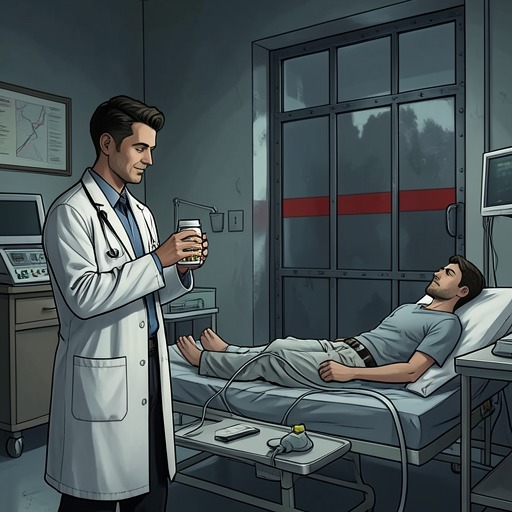
On the afternoon of August 31, Cook climbed to the eighth-floor ICU, where he had worked for many years. Most ICU patients had been airlifted the previous day, but four patients with do-not-resuscitate orders remained. One was Jannie Burgess, a seventy-nine-year-old nurse with advanced metastatic uterine cancer. Cook found her comatose and greatly swollen by fluid, weighing, in his assessment, more than three hundred pounds. The heat and stairs had already made the climb difficult for him. He concluded that he could not make the return journey to the ICU, that moving Burgess down six flights of stairs would be impossible for the exhausted staff, and that she probably had only about a day to live. He also believed the four nurses with her were needed elsewhere, although assigning them was not his decision.
Burgess appeared comfortable while unconscious and receiving intermittent pain medication. Cook feared that the medication might wear off and that she might regain consciousness in her severely altered condition during an attempted move. He asked her nurse to increase the morphine sufficiently to keep her comfortable until she died. He then wrote in her progress record that she had no respiratory or cardiac activity, added that she was pronounced dead but left the time blank, and signed the entry. He went back downstairs believing that he had acted appropriately. Later, he described his decision as a way to hasten her death and free the nurses from the floor, while also acknowledging that he had hastened her demise. His own account therefore held together two claims that the book keeps in tension: the decision arose from a desperate effort to relieve suffering and address the crisis, and the medication was intended to bring death sooner.
The medical record brought a further, concrete dimension to the case. It showed that Burgess received 15 milligrams of morphine seven times between 2:10 and 3:35 that afternoon, a total of 105 milligrams in an hour and a half. That was more than five times the largest amount she had received during any previous full day in the hospital; the largest single dose previously documented was 6 milligrams. Before Cook arrived, the nurse had recorded only intermittent, small doses for pain. The contrast between her earlier medication history and the concentrated doses after his spoken orders became part of the later review of her death.
Cook’s wider view of the evacuation was stark. Sitting on the emergency-room ramp with John Kokemor, he saw patients gathered in wheelchairs or seated behind walkers on mismatched chairs. Help was arriving too slowly for everyone who needed to leave. He believed the choices had narrowed to hastening some deaths or abandoning patients, and he regarded leaving them without care as unacceptable. This judgment helps explain the urgency he attached to decisions such as Burgess’s, but it does not resolve the ethical question raised by his actions: whether an intention to prevent suffering can be separated from the foreseeable, and in this instance acknowledged, hastening of death.
Advice, Investigation, and the Wish to Speak
When Mulderick asked what medication could be given to patients, she turned to Cook, who had a long record of using drugs to ease the distress of dying patients. He advised Anna Pou on a combination of morphine and a benzodiazepine sedative. Cook later said he believed Pou understood him to be describing medication that would make patients sleep and die. That was distinct, in his account, from the comfort treatment already being provided to patients on the second floor: when nurses reported pain or anxiety, physicians prescribed medication, and pharmacists had dispensed drugs for sleep, relaxation, and pain. Later, Mulderick presented the idea of medicating patients as an effort to provide comfort, citing Ativan as an example. Yet prescriptions seized from the pharmacy showed that Pou and other physicians had already ordered Ativan and other ordinary comfort medications during the disaster. The record thus complicates any simple account in which Cook’s advice merely introduced routine symptom relief.
After news organizations began contacting Pou amid concern about injections and the deaths, she called Cook, then in Houston. He had also been approached by reporters and wanted no public role. He warned her that media accounts could distort what they said and advised her to avoid speaking to the press. His response reflected apprehension about public interpretation, but it also meant that he did not immediately offer his own account of the hospital’s conditions.
Six days before the arrests, Virginia Rider brought Cook a subpoena to appear for an interview at the attorney general’s office; Butch Schafer waited in the car. Cook told his lawyer he would be willing to go and describe what he had seen. After the arrests, however, his lawyer instructed him not to speak voluntarily with investigators. Cook regretted that he had not been able to explain how desperate the hospital had felt and how little chance he believed the sickest patients had of getting out alive. He wanted to help defend Pou and the nurses. He also felt unimportant when prevented from doing so, and believed he might have been arrested himself had the nurses who worked with him not protected him in their discussions with investigators. The episode left his account of the crisis partly in the hands of others, even as he considered himself a participant whose decisions deserved to be understood.
Aftermath and Narrative Significance
Cook continued to feel the physical effects of the time at the hospital. He later underwent surgery for kidney stones, which he attributed to dehydration: in the oppressive heat, he had tried not to drink much so he would not need to use the bathroom. The detail links his recollection of the emergency to the bodily strain that had already limited his movement on the stairs and shaped his assessment of Burgess’s prospects for evacuation.
He also followed the public debate over Pou. Watching an episode of Boston Legal that seemed to reflect his view of the case, he hoped that the grand jury in New Orleans would see the events as he did. He believed that people who had not been at Memorial could not properly judge what had happened. That conviction did not erase the evidence about Burgess’s medication; instead, it emphasized the distance between a participant’s memory of an emergency and the later evaluation of orders, records, and outcomes.
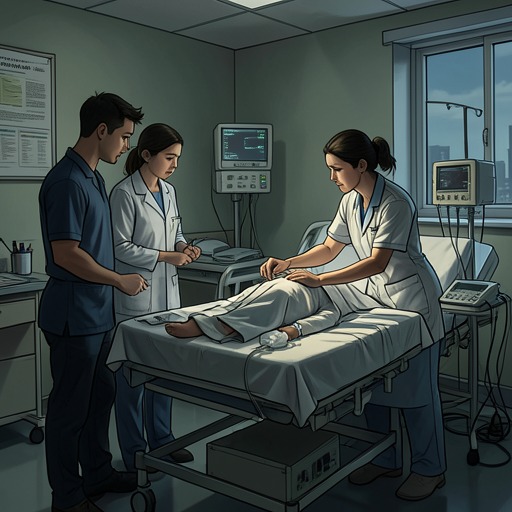
Years later, Cook treated Schafer during a hospital admission for a possible lung infection. Schafer, lying on a bed attached to monitors and drug infusions, recognized the irony that his life was in Cook’s hands, recalling his earlier presence outside Cook’s home when Rider served the subpoena. Cook did not appear to recognize him, treated him cordially, and told him there was nothing wrong. Schafer recovered. The encounter returns the story to the ordinary clinical relationship that the Katrina crisis had disrupted: Cook again occupied the position of physician, while the investigator who had once pursued the case was a vulnerable patient.
Cook’s role is significant because his experience made him both a source of practical authority and a witness to the limits of that authority. He understood comfort medication through years of caring for critically ill patients, but the disaster transformed familiar practices by removing time, dependable power, ordinary movement through the hospital, and the usual presence of families. His treatment of Burgess, his advice to Pou, and his later wish to explain the emergency illuminate the book’s central distinction between comfort care and deliberately hastening death without reducing that distinction to professional experience or good intentions alone.